Understanding the Philosophy Behind Gutenberg & Modern WordPress
Like many other WordPress developers and designers, I was used to building websites through drag-and-drop builders because they were fast, flexible, and visually convenient.
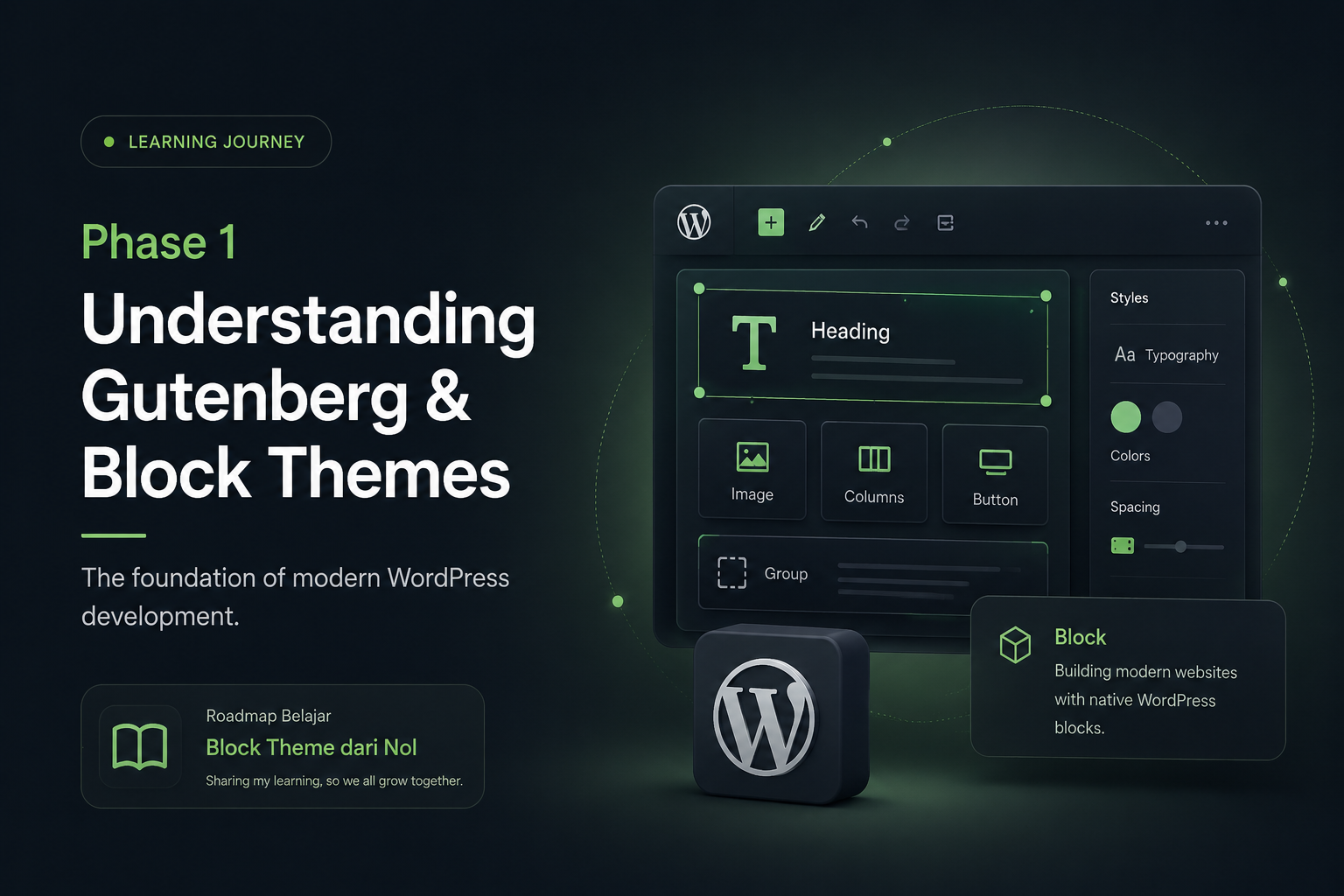
Why I started exploring
Gutenberg is no longer just a content editor. With block themes and full site editing, the entire site — header, footer, templates — is composed from the same building blocks you use to write a post. That changes everything about how you approach layout.
The block-based mindset
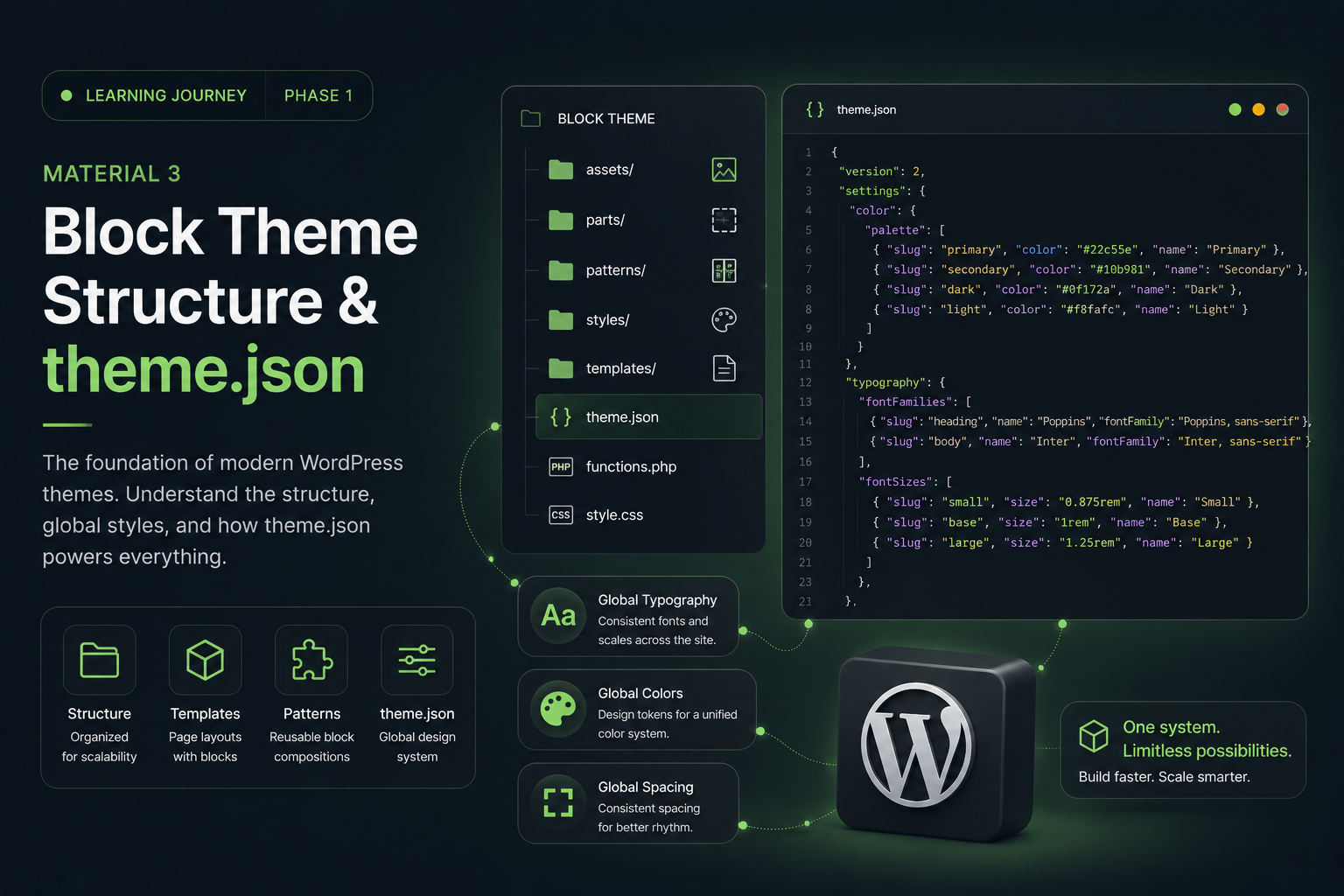
Instead of thinking in pages, you start thinking in patterns. A hero section, a callout, a pricing grid — each one is a reusable block you can register, style, and drop anywhere. Combined with theme.json, design tokens live in one place instead of being scattered across a builder's hidden style controls.
{
  "version": 2,
  "settings": {
    "color": { "palette": [...] },
    "typography": { "fontFamilies": [...] }
  }
}
What changed for me
It's not about abandoning tools — it's about understanding the architecture underneath them. The deeper I go, the more I believe Gutenberg has huge potential for the future of modern WordPress workflows.

Keep Reading
Building Layouts Without Elementor
the deeper I explore Gutenberg, the more I feel it has huge potential for the future of modern WordPress workflows.
Understanding Block Theme Structure & theme.json
After spending time learning Gutenberg and block-based workflows, I finally reached a point where modern WordPress started feeling completely different from traditional WordPress.
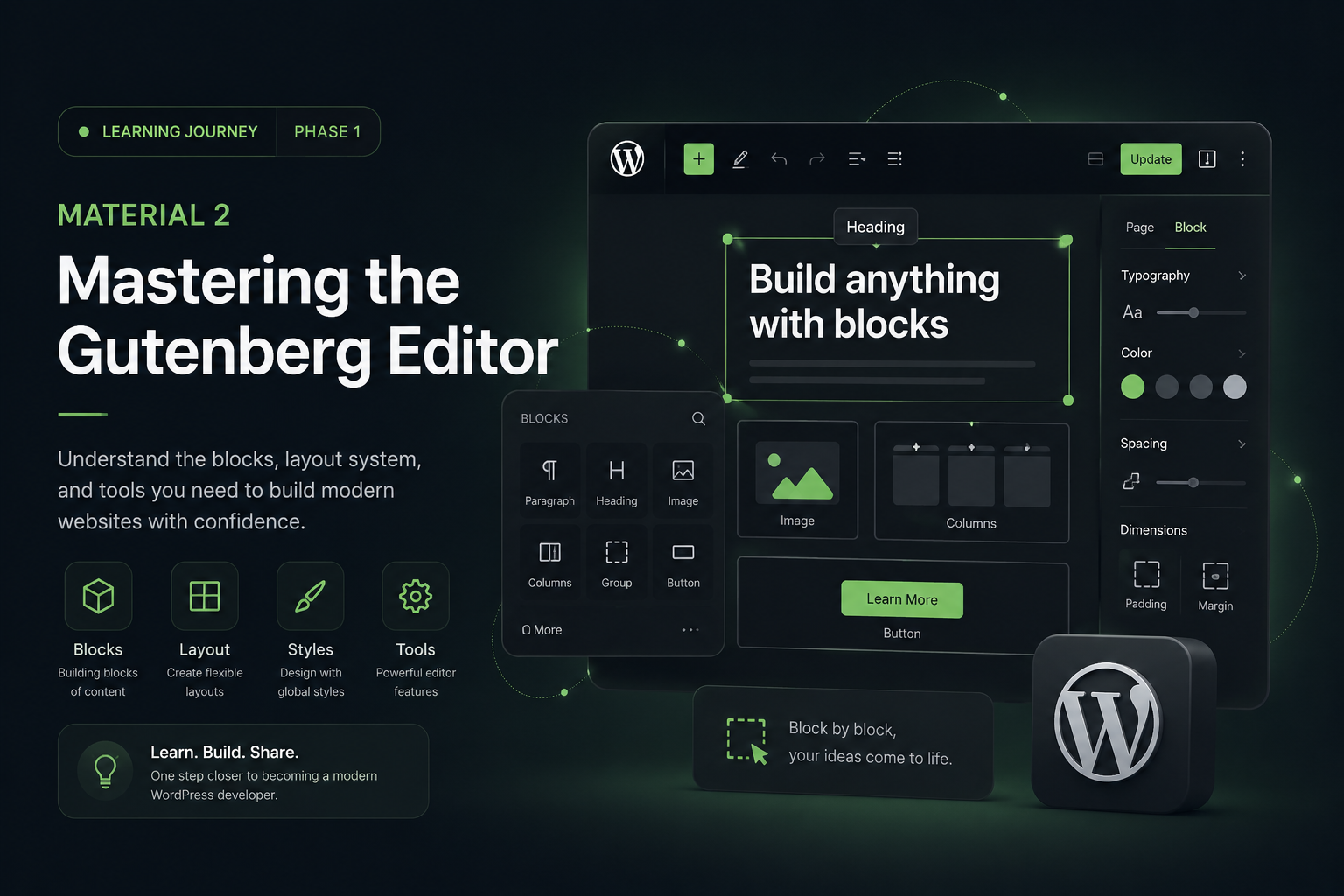
Understanding Gutenberg Editor More Deeply
To truly understand modern WordPress development, firstly need to deeply understand Gutenberg. Because Gutenberg is no longer “just a content editor.”